
Best Earplugs Layovers

Best Earplugs for Sleeping on Layovers
Hotel sleep is the weakest link in crew recovery. You land after a long duty day, have a long bus drive to the hotel (with traffic jams, of course…), check in late, and the window you have before the next report is already tight.
Then a slamming corridor door, running kids, a rumbling air conditioner, or early morning street traffic cuts that window even shorter.
Earplugs are the simplest tool to protect the sleep you get on a layover. This guide covers what to look for, which types suit different crew situations, and mistakes to avoid. I have tested many and made one of the best choices my Captain’s Pick.
This guide is written for working airline crew and shaped by the practical perspective of a long-haul pilot with 32 years of intercontinental flying experience.
As an Amazon Associate, we earn from qualifying purchases, which supports our website.
This article may also contain other affiliate links, which means we may earn a commission if you buy through them at no extra cost to you.
If you want the short version, most crew are best served by carrying two types: high-NRR foam earplugs for noisy hotel nights and a comfortable reusable silicone pair for quieter stays and side sleeping.

Why Hotel Noise Hits Crew Harder
Leisure travellers pick their hotel and set their own schedule. Crew does not.
You sleep when the roster says you sleep. Often during local daytime, in a room you did not choose, on a floor you cannot control.
Hallway housekeeping carts (with those glass drinking water bottles nowadays), elevator chimes, ice machines, adjacent room televisions, and street noise (here comes the Fire Brigade!) all compete with your recovery window.
Anyone who has flown long-haul knows the difference between sleeping through a five-hour rest opportunity and waking up twice during it. Before an eastbound return or a multi-sector day, that difference matters.
What Matters Most in Earplugs for Airline Crew
Not all earplugs solve the same problem. Before comparing materials and brands, it helps to know what crew use demands actually.
Noise Reduction Rating
The Noise Reduction Rating (NRR) in the US, or Single Number Rating (SNR) in Europe, indicates how many decibels an earplug can reduce under lab conditions.
Real-world performance is always somewhat lower, but the rating is still the most useful way to compare options side by side.
For hotel sleep, an NRR around 29 or higher is considered strong. An NRR of 22 to 25 is moderate and may suffice in quieter hotels, but will likely fall short with corridor noise or street traffic.
Comfort During Extended Wear
Crew sleep is not always a full eight-hour block. Sometimes you insert earplugs for a three-hour nap before an early report. Other times, you need them all night.
Either way, they must not cause pressure or soreness that wakes you up. Side sleepers in particular need earplugs that sit flush and do not press into the pillow.
Fit Reliability
An earplug that falls out at hour two is useless. Fit depends on ear canal shape and size, which varies widely between people.
No single earplug works perfectly for everyone. That is why many experienced crew carry two types.
Packability
You are already managing a crew bag with limited space. Earplugs need to be small, easy to store, and ready to use without setup or charging.
This is one reason why simple disposable or compact reusable earplugs often make more sense for crew than electronic options.
Alarm Audibility
You need to hear your phone alarm or crew wake-up call (Captain’s tip: check if the phone ringing volume was not set too low by the previous guest). Good sleep earplugs reduce background noise without making a loud alarm inaudible.
Foam earplugs with high NRR ratings will muffle alarms more than reusable silicone options. If you use high-attenuation foam, consider setting a louder alarm or using a vibration-based backup.
Foam vs Silicone vs Wax: What Works Best for Crew
Earplug materials behave differently. Each has trade-offs that matter in a crew context.
Foam Earplugs
Foam earplugs are the most widely used type and generally offer the highest noise reduction. Well-regarded foam models are rated around NRR 29 to 33.
They work by being rolled between the fingers, inserted into the ear canal, and then expanding to fill the space. When inserted correctly, foam tends to outperform other types for blocking low-frequency noise like traffic rumble, HVAC hum, and bass from adjacent rooms.
The main drawback is that they are disposable. After one or two uses, fit and hygiene decline. For crew who fly regularly, that means going through a lot of pairs, though the cost per pair is very low. (Crew tip: rinse with a little soap and water and reuse them again for days!)
Proper insertion matters a lot. Roll the foam into a tight, thin cylinder, pull the ear up and back to straighten the canal, and insert deeply enough that the outer end sits slightly recessed. A loosely inserted foam earplug performs far worse than its rating suggests.
Silicone Reusable Earplugs
Reusable silicone earplugs typically offer moderate noise reduction, generally in the SNR 22-27 range. That is lower than foam, particularly against low-frequency sounds.
But they offer noticeably better comfort for side sleepers and for extended wear. Many crew prefer them because they are easy to insert, stay put reliably, and can be washed and reused for months.
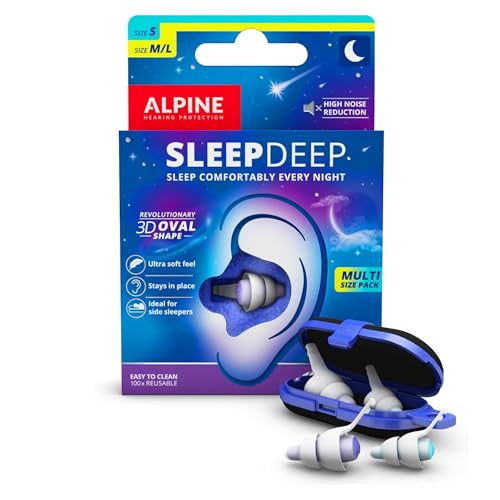
The Loop Quiet 2 (SNR 24) is a popular choice known for its low-profile design that sits flush in the ear. The Alpine SleepDeep (SNR 27) uses an oval-shaped core and comes in two sizes to fit different ear canals.
For crew staying in reasonably quiet hotels, silicone reusables are often enough. In noisier environments, they may fall short.
Wax and Moldable Earplugs
Moldable wax earplugs and silicone putty earplugs do not enter the ear canal at all.
Instead, they are shaped and pressed over the ear canal opening to form a seal. This makes them comfortable for almost any ear shape and a good option for side sleepers. You can also use those for swimming,
Their noise reduction is moderate, typically around NRR 22-23. They handle mid and higher frequency noise reasonably well, but are weaker against low-frequency rumble compared to foam.
They suit crew who find in-ear earplugs uncomfortable but still want meaningful noise reduction. Pairing them with a white noise app can help fill in the gaps.
Best Earplugs by Crew Use Case
Best for Very Noisy Hotels
Downtown layover hotels, rooms near elevators, thin-walled buildings, and rooms facing a busy road all call for maximum noise blocking. Foam earplugs are the right choice here.
Mack’s Slim Fit Soft Foam (NRR 29) and Flents Quiet Time (NRR 33) are both widely available, inexpensive, and practical starting points. If one brand does not fit your ears well, the other may fit better because they differ in shape and size.
For very noisy situations, foam earplugs combined with a white noise source on your phone give you the strongest layover sleep protection available without electronics in your ears.

Best for Side Sleepers
Side sleeping is common among crew, especially on short layovers when you fall asleep in whatever position comes first. Foam earplugs can create uncomfortable pressure when your ear presses into the pillow.
Reusable silicone options like the Alpine SleepDeep or Loop Quiet 2 sit flush and avoid pillow pressure entirely. Moldable wax earplugs also work well for side sleepers because nothing protrudes from the ear.
If you primarily sleep on your side, prioritise a low-profile fit over maximum noise reduction. A comfortable earplug you keep in all night protects your sleep better than a high-performance one you pull out at 3 AM.
Best for Budget-Conscious Crew
A bulk pack of foam earplugs typically costs less than a single pair of premium reusable earplugs, while also giving you stronger noise reduction on louder nights.
If you go through earplugs frequently and do not mind the disposable approach, foam in bulk is hard to beat on value. Keep a few pairs in your crew bag, toiletry kit, and bedside pouch so you are never caught without them.
For crew who want to spend a little more for less waste, a single pair of reusable silicone earplugs can last months with proper care, bringing the per-use cost down over time.
Best for Crew Who Want Reusable Options
If you prefer not to throw away earplugs after every layover, reusable silicone is the way to go.
The Alpine SleepDeep offers a good balance of noise reduction, comfort, and durability. The oval shape tends to fit a wider range of ear canals than round designs, and the two included sizes help you dial in the right seal.
The Loop Quiet 2 provides slightly less noise reduction but is very easy to insert and clean. Its flat profile makes it one of the most comfortable options for sleeping on your side.
Both can be washed with soap and water and stored in a compact carry case, which makes them practical for repeated crew use.
Quick Buying Recommendations for Crew
If you want a simple answer based on your flying pattern, here is what tends to work best:
- Long-haul crew: carry both foam and reusable silicone. Use foam for noisy city layovers and reusable silicone for quieter hotels where comfort over a longer sleep window matters more.
- Short-haul crew: reusable silicone earplugs are usually sufficient. Sleep windows are tight, so quick insertion matters and quieter regional hotels often do not require maximum noise blocking.
- Commuters: a low-profile, reusable earplug can work both in transit and in the hotel, keeping your setup simple.
- Light sleepers: start with high-NRR foam earplugs and pair them with a white noise app. If small noises wake you easily, this gives you the strongest practical protection without electronic sleep gear.
If you are also trying to block hotel light, combine your earplugs with a sleep mask so you solve noise and brightness at the same time.
Comparison Table
| Option | Best For | Main Advantage | Potential Drawback | Crew Fit |
|---|---|---|---|---|
Mack’s Slim Fit Soft Foam |
Noisy hotel environments |
High noise reduction, very low cost (NRR 29) |
Disposable, may press uncomfortably for side sleepers |
Go-to for loud layover cities |
Flents Quiet Time |
Larger ear canals, noisy hotels |
High noise reduction, latex-free (NRR 33) |
Longer shape, not ideal for smaller ears |
Good alternative if Mack’s fits too loose |
Alpine SleepDeep |
Reusable comfort, side sleepers |
Oval shape, two sizes, comfortable all night (SNR 27) |
Lower noise blocking than foam |
Strong all-round reusable for regular crew use |
Loop Quiet 2 |
Side sleepers, commuters |
Flush fit, easy to clean, quick insertion (SNR 24) |
Moderate noise reduction |
Good for quieter hotels and dual commute use |
Wax earplugs |
Ear canal sensitivity |
Does not enter the ear canal, comfortable for many sleepers |
Weaker against low-frequency noise |
Solid for crew who dislike in-ear options |
Moldable silicone putty earplugs |
Universal comfort, backup use |
Moldable seal over the ear opening |
Moderate noise reduction, can attract lint |
Useful backup for any crew bag |


Common Mistakes Crew Make With Earplugs
Shallow Insertion of Foam Earplugs
This is the most common reason foam earplugs underperform. If the earplug is not inserted deep enough, noise leaks around it.
A properly inserted foam earplug should sit slightly recessed in the ear canal, not protrude. Roll it thin, pull the ear back, and push it in firmly.
Using the Same Foam Pair for Too Long
Foam earplugs lose elasticity and hygiene after one or two uses. Reusing the same pair across multiple layovers results in a poorer seal and increased risk of irritation.
Treat them as disposable. Bring enough fresh pairs for each trip.
Buying Based on Brand Alone
Some popular earplug brands have strong marketing but only moderate noise reduction. Always check the NRR or SNR rating before buying.
A reusable earplug with a lower rating will block noticeably less than a foam earplug with a higher rating, even if the branding looks more premium.
Not Carrying a Backup
Earplugs get lost. They fall behind the hotel bed, get left in the crew rest, or slip out of your pocket.
Keep a spare set in a different compartment of your crew bag. A small zip bag with two or three foam pairs weighs almost nothing.
Relying on Earplugs Alone
Earplugs work best as part of a sleep system. Combining them with a white noise app, a good sleep mask, and a proper room setup routine is more effective than relying on any single tool.
Tips for Getting the Best Results
Try at least two or three different types before settling on one. Ear canals vary in shape and size, and what works for a colleague may not work for you.
Store earplugs in a small hard case or clean pouch. Loose earplugs in a bag pocket collect dust and lint that can irritate the ear canal.
Clean reusable earplugs after every use with mild soap and water. Let them air dry completely before storing.
If you are a light sleeper dealing with serious hotel noise, pair earplugs with a white noise source. The combination of physical noise blocking and masking sound can be very effective against irregular noise like doors slamming or hallway conversation.
For more on building a complete layover sleep strategy, see the guide on what really helps with jet lag for airline crew and the overview of the best travel pillows for crew.
Frequently Asked Questions
Are earplugs safe to use every night on layovers?
Generally, yes. The main risks are irritation from dirty or over-reused foam earplugs, or from inserting them too aggressively. Use clean earplugs, replace disposable ones regularly, and insert them gently. If you experience persistent discomfort or hearing changes, consult an audiologist.
Will I still hear my alarm with earplugs in?
In most cases, yes. A phone alarm at normal volume placed on the bedside table is usually audible through earplugs. If you use high-NRR foam and tend to sleep heavily, set a louder tone or add a vibrating alarm as backup.
How do I choose between foam and reusable earplugs?
If maximum noise blocking is the priority and you do not mind replacing earplugs frequently, foam is the stronger option. If comfort, side sleeping, and reusability matter more, reusable silicone is a better fit. Many crew carry both and choose based on the hotel.
Can earplugs cause ear infections?
The risk is low with proper hygiene. Clean your hands before insertion, use fresh foam earplugs for each sleep, and wash reusable earplugs after every use.
What NRR rating do I need for hotel sleep?
For quiet to moderately noisy hotels, an NRR of 22 or higher is usually adequate. For noisy urban environments, hotels near airports, or rooms with thin walls, an NRR of 29 or higher is a safer choice.
Do noise-cancelling earbuds work better than earplugs for sleep?
They can help, but they have drawbacks for crew sleep. They need charging, can be bulky for side sleeping, and are more expensive to replace if lost. For dedicated hotel sleep, passive earplugs are simpler and more reliable.
Final Verdict on the Best Earplugs for Sleeping on Layovers
For most airline crew, the smartest approach is carrying both: a supply of high-NRR foam earplugs for noisy hotel nights, and one pair of reusable silicone earplugs for quieter stays where comfort over a longer sleep period matters more.
A practical combination of foam plus reusable silicone covers nearly every layover scenario. It is low-cost, easy to pack, and much more flexible than relying on one type alone.
Pair them with a proper sleep mask and a consistent room setup routine, and you have a layover sleep kit that actually works.
